
Roof-washing basics
What Causes Black Roof Streaks—and Should You Pressure Wash Them?
Dark streaks do not automatically mean the roof needs replacement, but they do call for the right diagnosis and a shingle-safe cleaning plan.
The short answer
What homeowners need to know
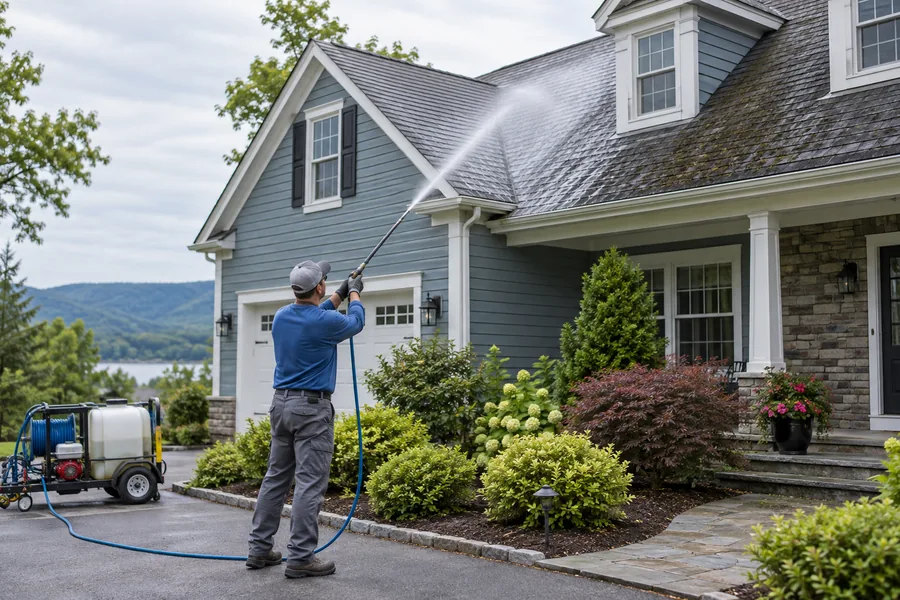
Dark roof streaks are commonly associated with airborne algae on asphalt shingles. Industry guidance warns against high-pressure washing because it can loosen protective granules; roof cleaning should use a controlled low-pressure treatment matched to the roof.
Why the streaks often run down the roof
The dark discoloration seen on many asphalt-shingle roofs is commonly linked to algae. It often becomes more visible on shaded or moisture-prone roof planes and can spread into longer streaks as runoff carries the discoloration downward.
Moss, lichen, tree debris, soot, and material wear can look different and may require a different response. Photos are useful for an initial conversation, but roof material, pitch, access, and condition still need to be evaluated before work is confirmed.
Why high pressure is the wrong shortcut
Asphalt shingles rely on their surface granules. The Asphalt Roofing Manufacturers Association warns that high-pressure washing can cause granule loss and premature roof-system failure. Scrubbing or aggressive brushing can also disturb the surface.
That is why roof washing is not simply house washing performed higher up. It needs its own low-pressure application plan, runoff controls, property protection, and safety assessment.
What a roof-washing quote should consider
Roof work is shaped by more than square footage. A useful quote should account for the variables that affect safe access, treatment, and protection below.
- Roof material, age, and visible condition
- Pitch, height, and safe access
- Type and severity of staining or growth
- Gutters, downspouts, and runoff path
- Landscaping, siding, fixtures, and lower roof sections
Cleaning is not a roof repair
A wash can address suitable surface staining, but it does not repair loose shingles, flashing, leaks, rot, or other roofing defects. If the roof shows signs of failure, the right next call may be a qualified roofer rather than a cleaning appointment.
Ask for the cleaning method in writing and confirm that the contractor will not use high pressure on asphalt shingles. That single question helps separate roof-specific care from a one-method-fits-all wash.
Industry source: Asphalt Roofing Manufacturers Association: algae and moss cleaning guidance