
Choose the right method
Soft Washing vs. Pressure Washing: Which Method Fits Your Home?
The best cleaning method is not the strongest one. It is the one matched to the surface, the buildup, and the condition of the property.
The short answer
What homeowners need to know
Soft washing is generally the better fit for siding, roofs, and finished exterior materials. Controlled pressure is usually reserved for durable flatwork such as concrete, pavers, and masonry after the surface is inspected.
The difference is more than water pressure
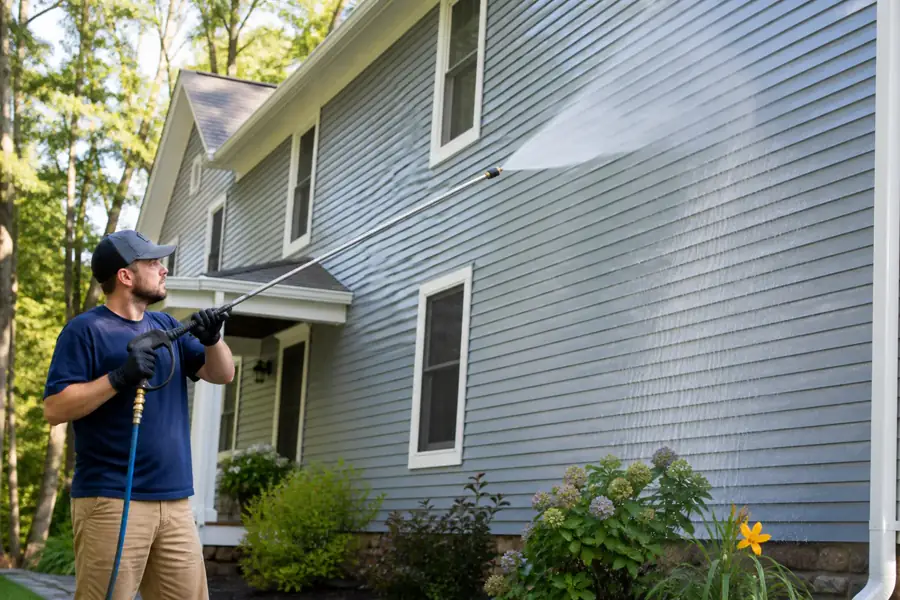
Pressure washing relies on the mechanical force of water to release dirt and buildup. Soft washing relies more on a surface-appropriate treatment, dwell time, and a controlled low-pressure rinse. Both can be professional methods, but they solve different problems.
A driveway and a section of vinyl siding may sit only a few feet apart, yet they should not automatically be cleaned with the same nozzle, distance, or pressure. The material should make the decision—not the equipment already in hand.
Where soft washing usually makes sense
Finished and more delicate exterior surfaces need a gentler approach. Soft washing is commonly selected when the goal is to loosen organic staining without forcing water behind siding, marking a painted surface, or disturbing roofing material.
- Vinyl, composite, and many painted siding systems
- Soffits, fascia, and gutter exteriors
- Stucco and other finishes that require a careful inspection
- Asphalt shingles using a dedicated roof-washing process
Where controlled pressure usually makes sense
Durable horizontal surfaces can often benefit from controlled pressure and the correct attachment. Even then, maximum pressure is not the goal. Consistent passes, edge work, drainage awareness, and a final rinse matter more than simply turning the machine up.
- Concrete driveways and walkways
- Patios and durable masonry
- Many paver surfaces when the cleaning scope is clearly defined
- Other hard surfaces that pass a condition check
What a clear quote should tell you
A useful exterior-cleaning quote should name the surfaces, the intended method, important access issues, and anything outside the scope. Specialty stains such as oil, rust, paint, and oxidation may require separate evaluation because ordinary washing does not guarantee restoration.
If a contractor plans to use one high-pressure process everywhere, ask how the method changes between the roof, siding, glass, and concrete. A surface-by-surface answer is a strong sign that the property is being evaluated thoughtfully.